Travel and Adventure Jobs.


Some Matadorians have jobs that directly involve travel and adventure, whether they work as a wildlife biologist, a bush pilot, the deckhand on a cargo ship, or a dishwasher at McMurdo Station in Antarctica.
We profile these individuals across the Network to find out what they do, why the do it, and how their professions influence and affect their travel lives (and vice versa).
Also, in a series at the Matador Life channel called “How’d you get that gig?”, we examine what it takes to land your own travel adventure job.

Culture Guides.


Though the cause for uniting the whole of humanity under a single peaceful banner is noble and good, it is the drastic differences between us that continues to make life, especially travel, so very worthwhile. Whether it’s as stark as arriving in a country that doesn’t speak your language or as subtle as noticing differences in transportation, experiencing the world’s cultural varieties teaches us things books can’t hold–not only about the subject at hand, but ourselves as well.
While your expectations are always going to be wrong in some way, it’s never a bad idea to get a glimpse of where you’re going. Whether it’s to check out the Sami in northern Sweden, take a bath in Damascus, or hike the Great Wall, Matadorians have been there. Check out the content below, and let us know what you discover after you return (or decide to stay).

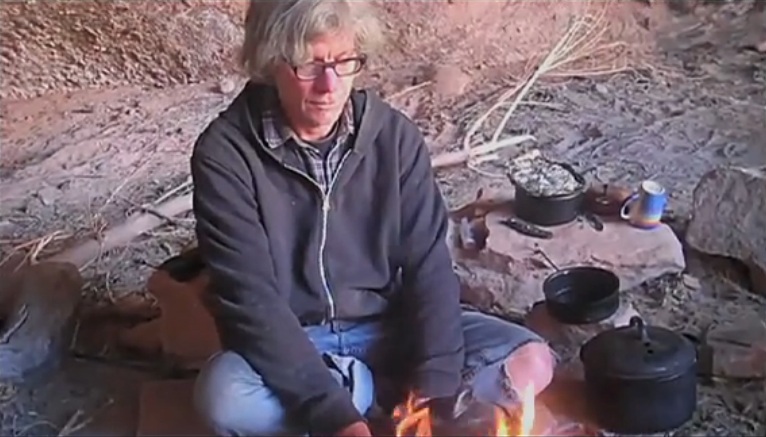
Instead of traveling, maybe just live in a cave with no money [VID].


Daniel Suelo has lived without money for more than 10 years, and in so doing, accomplished much of what people look for but fail to realize in travel.
WE FIRST WROTE about Suelo — “Social rebel or mooch?” — in 2009. Three years later, as shown in the video profile above, he’s still living part-time in his cave near Moab, still dumpster diving and foraging for food, still posting regularly on his blog. He still seems stoked.
While the conversation around Suelo tends to focus on root questions of economics, I’d like to look for a second at his simple living adherence in the context of travel. Simply put, Suelo’s relationship with Moab reminds me of travel at its most meaningful — when the traveler is engaged with a local community, but lives freely on its outskirts, spending extended time in the surrounding terrain, becoming, as it were, a “student” of the place.
The irony is that most of us feel compelled to travel far from our home grounds to experience this. In a recent interview, Mark Warren, a naturalist from Georgia who lived in a tipi for two years, gave this example:
I have a physician friend who lives here in the Appalachians, where we are surrounded by thousands of acres of National Forest. This part of our state is famous for its hunting opportunities, yet he flies to Montana or Colorado or Idaho, where a guide meets him and leads him to the particular animal he is anxious to kill that season.
This longer documentary from 2006 on Suelo really shows how his life emulates that of traveler, a couchsurfer, one truly experiencing a place. It all makes me think how many of us would save ourselves the trouble (not to mention resources) if instead of going somewhere to experience this, we just stayed at home and became adherents of simple living.
Thoughts?

The incident at Akko Prison.


Photo: Shayan (USA)
WE WERE FOLLOWING the Crusader sea wall in Akko one afternoon when suddenly, to our right, we saw it in all grandly massive ugliness. The Akko Prison, now an Israeli museum, was a busy British incarceration center during the thirties and forties. Jewish resisters from the Hagannah and the Stern Gang were jailed and sometimes hanged here.
What bolted this place to my brain were the words of Paul Newman (fearless Hagannah leader) to a rehearsing prison attacker: “Don’t let my brother (also fearless, but from the rival Stern Gang) die at the end of a British rope.”
My psyche all stirred up, I asked Miriam, my lady friend, “Should we go in and see what it looks like?”
Miriam near Akko Prison. Photo: Author
“Sure. Why not?”
The two of us are instinctively, maybe unhealthily drawn to holy places, so Akko Prison, in its dark way, would be cleansing perhaps.
The soldiers who guarded the gate were not the standard eighteen-year-old recruits, but a couple of older, expressionless reservists.
They looked us over the way serious shoppers look at melons in the market. Did we have blemishes discernible to the practiced eye? Miriam, an Israeli, was asked for her ID, I for my passport.
Miriam presented them with a facsimile, reluctant to carry the original around with her for fear of losing it. The suspicion this aroused in the soldiers was close to delight.
This woman, who abandoned Canada for a life in Israel in her late sixties, was subjected to a mini-interrogation about her ID. What does it take, I wondered, to perfect this allergy to irregularity? Does terror sometimes visit in the slacks of a well-groomed female citizen with a bad Hebrew accent?
The soldiers made me feel invisible. Part of me wanted to be included in this pointless ceremony. Actually, Miriam later said, I was. The soldiers wanted to know how long and how she had known me. I regretted my lack of Hebrew. I never did ask her what she told them.
“So,” the soldier in charged asked when he was finally satisfied everything was in order, “you want to visit the prison.”
Miriam looked at each other and laughed like two children who had mistakenly wandered into a party for grownups.
“No!” we said in unison and hurried off.
“It must have been a slow day.” Miriam kept laughing. “This was their one chance to practice what they learned in security training school.” 

post

MSTI Maritime Academy Launches Sri Lanka’s Most Advanced and Comprehensive Ship Handling Simulator.

    Established in 1986 as Sri Lanka’s first privately-owned maritime training school, MSTI Maritime Academy today holds a prestigious l...

Popular Posts ජනප්‍රිය ලිපි